An Evening with Team Deakins: Reflections on a Career in Cinematography
Last night I had the pleasure of attending the book launch for Reflections: On Cinematography by Sir Roger Deakins at the Plaza Cinema in Liverpool.
As a cinematographer, there are certain names whose work you grow up studying, admiring and returning to throughout your career. Roger Deakins is, without question, one of those names.
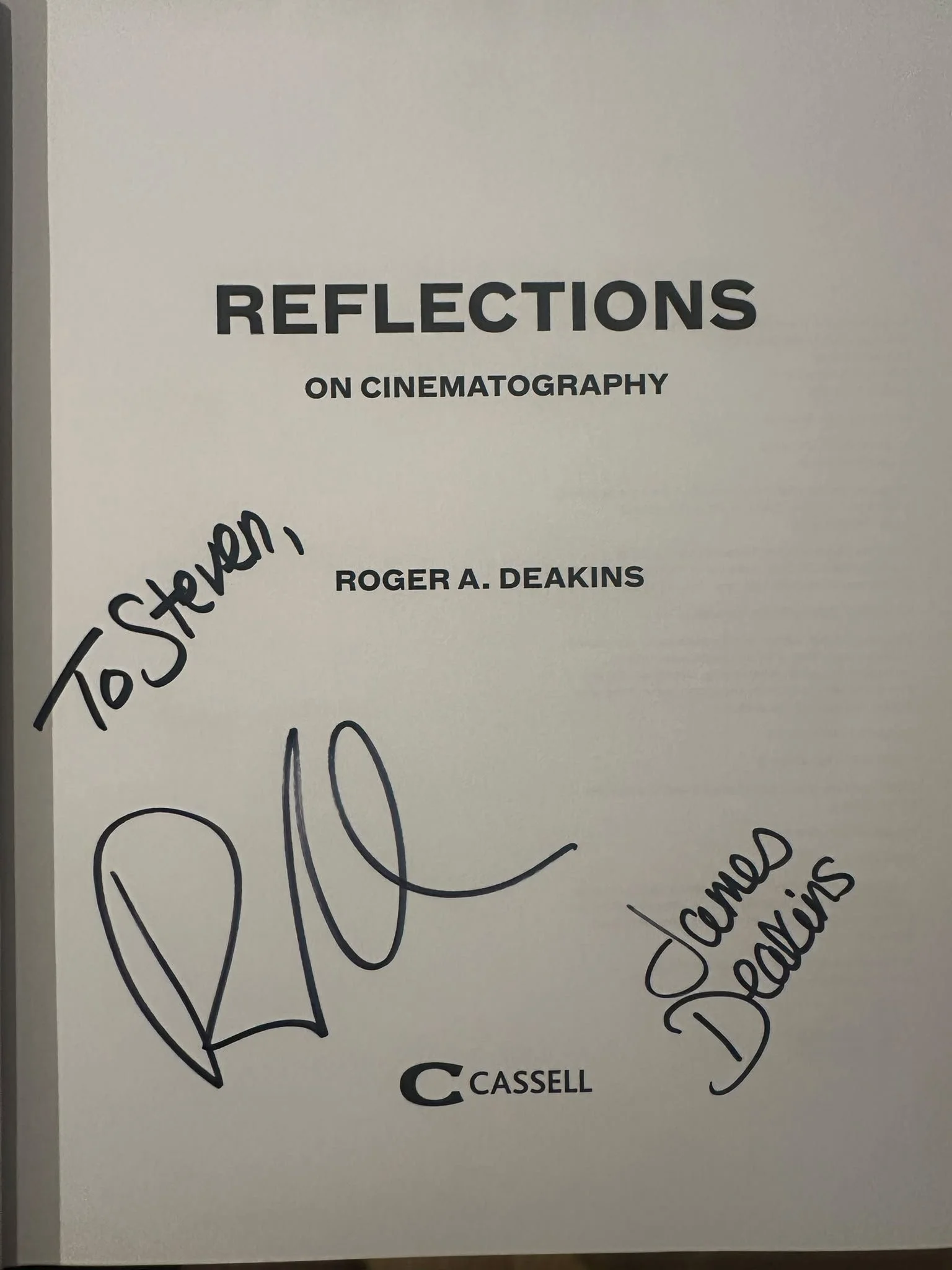
So to have the opportunity to not only collect a signed copy of his new book, but to sit in a cinema in Liverpool and listen to Roger and James Deakins talk openly about their careers, their experiences and the journey that eventually became Team Deakins, was a pretty special evening.
The event began with a short meet and greet as we collected our copies of Reflections, before taking our seats for an evening in conversation with Roger and James.
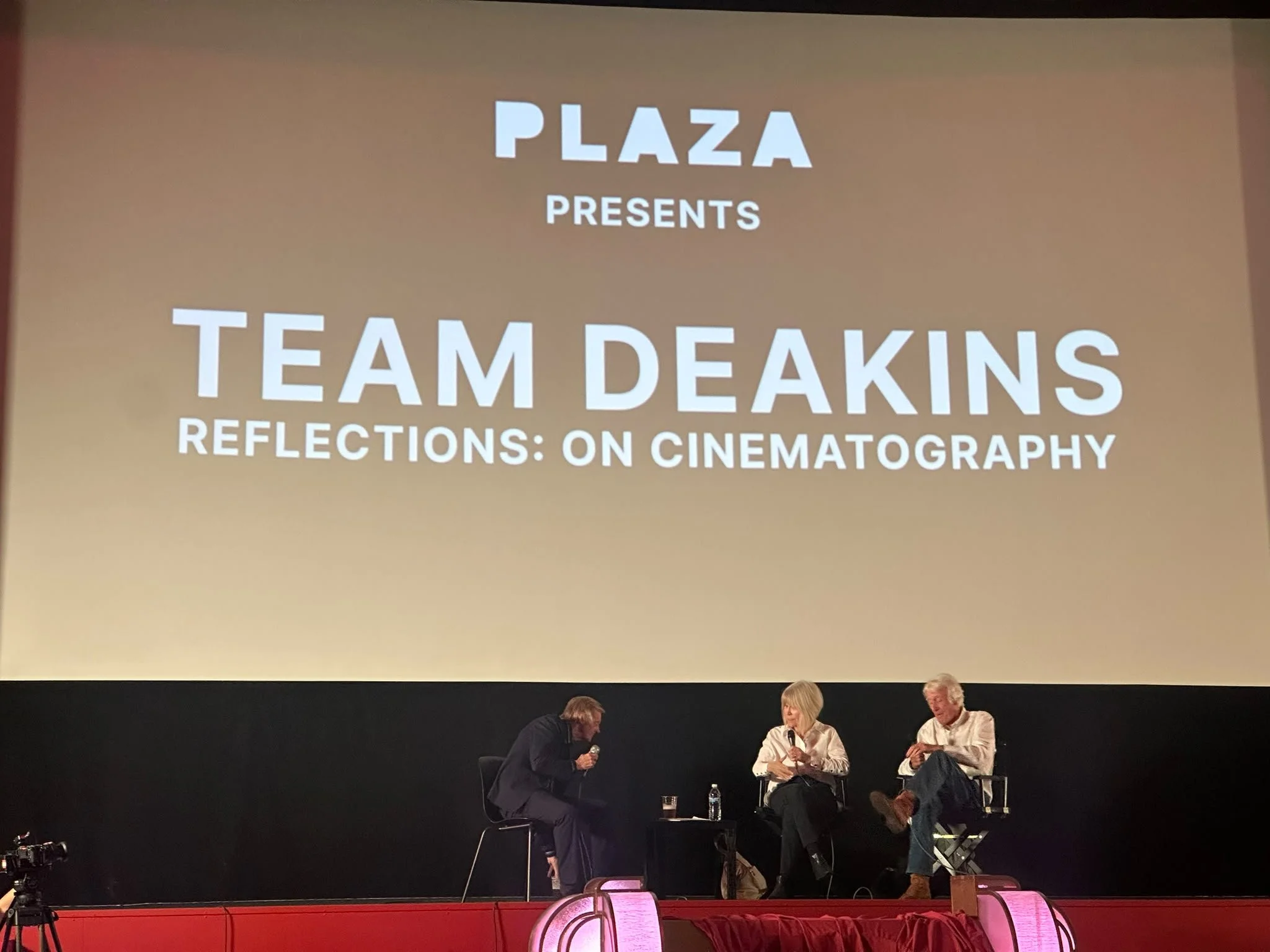
From Team Deakins to a 50-year career
For anyone who has listened to the Team Deakins podcast, there is something particularly enjoyable about seeing Roger and James together in person.
The podcast has become such a valuable resource for cinematographers, filmmakers and students because of how openly they discuss the industry, the creative process and the realities of making films. What started as an idea between the two of them has grown into something that reaches filmmakers all over the world.
Hearing them talk about how Team Deakins developed was interesting in itself, but the conversation naturally moved into Roger's career and some of the extraordinary filmmakers he has worked alongside.
There were stories about working with the Coen brothers, Sam Mendes and many others, but what I enjoyed most was that the stories weren't presented as a polished account of a hugely successful career.
There was plenty of humour, honesty and the occasional reminder that even the most celebrated careers rarely follow the path you might imagine.
It didn't exactly start with the film Roger expected
One of the stories that made me laugh was Roger talking about one of his early experiences trying to find his way into the industry.
He described an early 16mm film that, let's just say, wasn't quite the introduction to filmmaking he had imagined — particularly because it involved rather more nudity than he had anticipated!
It was a great reminder that careers rarely begin in the perfect circumstances.
You start somewhere.
You take the opportunities that come along.
Sometimes they're exactly what you hoped for.
Sometimes they're absolutely not.
But they can all become part of the journey.
That felt particularly relatable to me. Looking back over my own career, the route from trainee, through loading and focus pulling, to operating and eventually shooting as a DOP hasn't been a straight line either.
There are jobs and experiences along the way that, at the time, might not seem particularly significant.
Years later, you realise they were all contributing something.
The reference that became a positive
Another story I particularly enjoyed was about how Roger came to work with the Coen brothers.
At one point, the Coens contacted a previous director Roger had worked with and asked for a reference.
Roger was later told what that director had said about him.
The funny thing was that what could have sounded like a list of negatives turned out to be almost exactly what the Coen brothers were looking for.
The description was essentially that Roger was a cinematographer who wanted to shoot single camera, liked to operate his own camera, wasn't particularly interested in second unit and had very specific ideas about how he wanted to work.
On paper, those comments might not sound like a glowing recommendation.
But for the Coen brothers, they were almost the perfect qualities.
It was a brilliant reminder that there isn't necessarily one definition of what makes the "right" cinematographer.
What one director might see as a weakness can be exactly what another director is looking for.
And perhaps more importantly, it reinforced something I've increasingly come to appreciate in this industry:
You don't need to be the right person for every job. You need to be the right person for the right job.
That's an important distinction.
Listening to the questions
There was also a short opportunity for questions from the audience.
I have to admit, I was tempted to put my hand up.
But I was also slightly surprised by the direction of some of the questions. A lot centred around working relationships with directors, script development and the broader creative process rather than the more technical aspects of cinematography and lighting that I was perhaps hoping to hear Roger discuss.
That said, those conversations were interesting in their own right.
And then, right at the end, came a question that really caught my attention.
AI.
Would Roger Deakins embrace AI?
Someone asked Roger whether he would embrace or resist the idea of AI being used as a tool in filmmaking.
I have to admit, I wasn't expecting the answer I heard.
Rather than dismissing it outright, Roger drew comparisons with the transition from film to digital cinematography.
Digital cameras fundamentally changed the way we worked, and although there was — and still is — plenty of debate around that transition, it ultimately became another step in the development of filmmaking technology.
His response suggested that perhaps AI should be viewed in a similar way.
Not necessarily something to fear, but another tool that will inevitably become part of the filmmaking landscape.
James then added an important qualification: like any tool, it can be used well or badly.
And that, perhaps, is the real issue.
A tool isn't inherently good or bad.
It's what you do with it.
A camera can be used to create something beautiful or something completely forgettable. CGI can be used to enhance a story or overwhelm it. Digital technology can make filmmaking more accessible while also encouraging shortcuts.
AI will probably be no different.
The interesting question isn't simply whether we should use it.
It's how we use it, why we use it and whether it makes the filmmaking better.
That was probably my biggest surprise of the evening.
The career behind the images
One of the things I found most enjoyable about the evening was that it wasn't really about celebrating individual films.
Of course, there were stories about some extraordinary films and directors.
But underneath all of that was a story about a career.
A career built over decades.
A career that began in very different circumstances to where Roger eventually found himself.
A career that included documentary work, music videos, television and eventually some of the most recognisable films in modern cinema.
It was a useful reminder that when we look at someone like Roger Deakins, we tend to see the finished product.
We see The Shawshank Redemption, Fargo, No Country for Old Men, Skyfall, Blade Runner 2049, 1917 and so many other incredible films.
We don't necessarily see all the years of work, experimentation, mistakes, relationships, setbacks and opportunities that came before them.
That's probably one of the things I find most encouraging about hearing experienced filmmakers talk about their careers.
It makes the journey feel more human.
A book I'm looking forward to reading
The evening finished with a screening of The Shawshank Redemption on the big screen.
Sadly, I had to miss that part.
I've seen the film before, of course, but with my wife pregnant and the two of us expecting our first child, getting home felt more important than staying for another few hours.
There will always be another opportunity to watch Shawshank.
There won't always be another evening quite like this one.
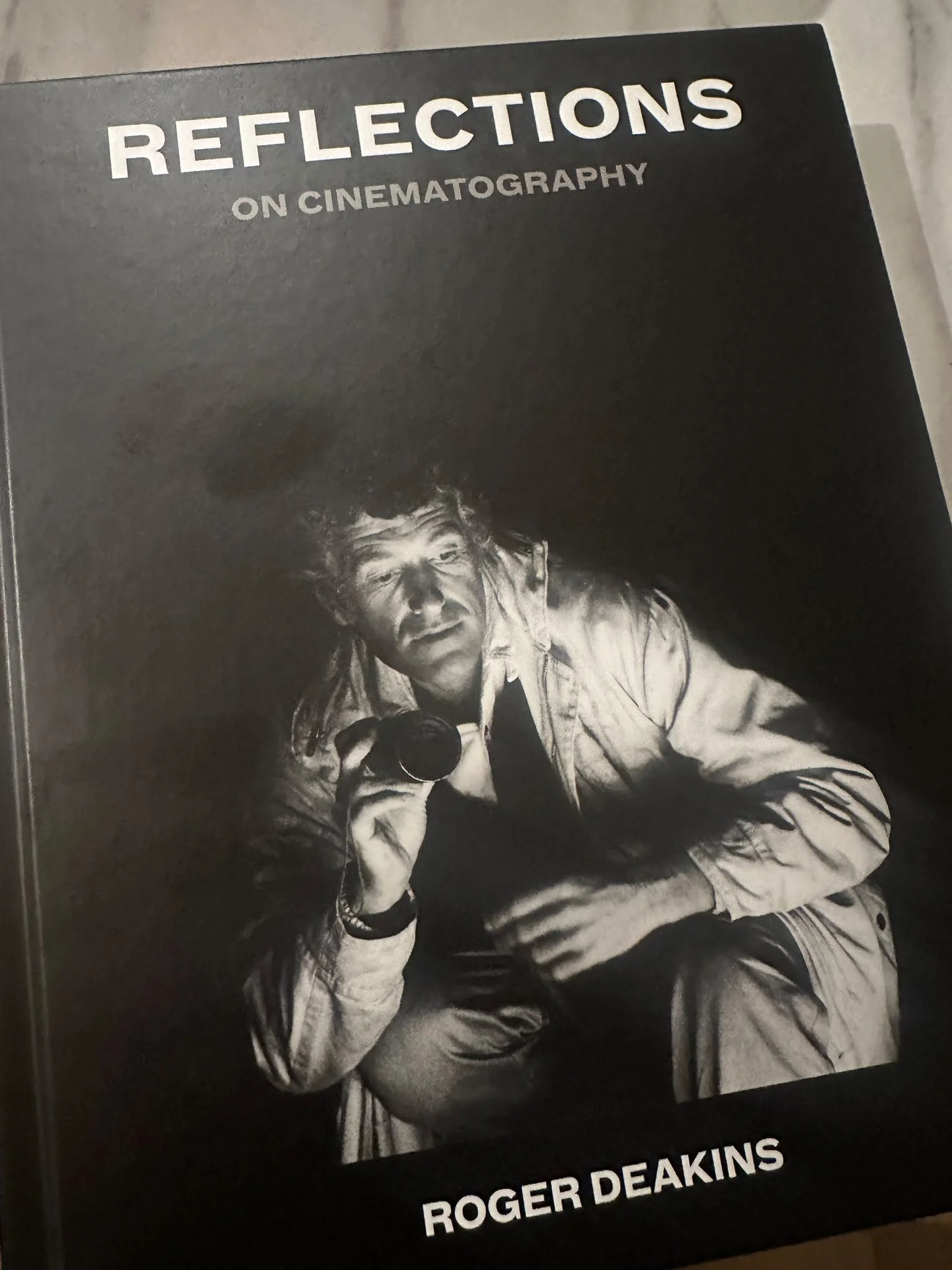
And now I have a signed copy of Reflections: On Cinematography sitting at home, waiting to be read.
The book promises a much deeper look into Roger's life and career, including his early documentary work, music videos and collaborations with filmmakers including the Coen brothers, Sam Mendes and Denis Villeneuve. It also contains photographs, sketches and diagrams from his personal archive.
I'm looking forward to discovering the stories and ideas that didn't make it into last night's conversation.
More importantly, I'm interested in reading the reflections of someone who has spent more than five decades figuring out this strange, difficult and wonderful craft that we call cinematography.
Because regardless of where you are in your career, there is always something to learn.
And sometimes the best thing you can do is sit quietly in a cinema and listen to someone who has been doing it for a very, very long time.
Thank you to Roger and James Deakins for a great evening.
Now, time to read the book.
